How Laser Dentistry is Changing How Dentists Treat Gum Disease
September 23, 2026
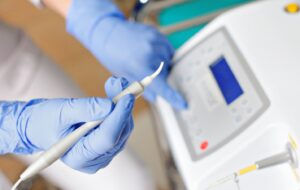
Treating gum disease hasn’t always been a comfortable (or enjoyable) experience. Although still used today, many dentists rely on scalpels and sutures to remove infected tissue, which can mean a long, unpleasant recovery. Fortunately, times have changed, and many experts now use a new technology: dental lasers. These handheld devices replace older methods by preserving healthy tissue, keeping patients comfortable, and shortening recovery time. Discover the benefits of laser dentistry and how it makes treating gum disease easier than ever before!
Greater Patient Comfort
Dental lasers make treatment more comfortable because they don’t “cut” the tissue. Removal with a scalpel is invasive and leads to a longer recovery. However, soft tissue lasers vaporize bacteria and gently remove infected layers with light energy, making the process safe and more comfortable for patients.
Preservation of Healthy Tissue
Too often, a scalpel will remove healthy tissue along with the bad. This is a problem; one that can be avoided with a dental laser. Your dentist can use the precision of the light energy wavelength to target only diseased areas, keeping healthy tissue intact and untouched. This is good news if you want to avoid more treatment in the future to address potential gum recession, a common problem that can occur when scalpels and sutures are used.
Faster Recovery
Surgical gum disease treatment with traditional methods puts you at risk of swelling and discomfort during your recovery. On average, you may spend several weeks, or up to a month, waiting for your mouth to heal. Why put yourself through this when your dentist can use a soft tissue laser to shorten your recovery time to only a few days? The targeted laser energy makes removing diseased tissue much easier, so you don’t have to worry about damage to the surrounding area.
Better Gum Reattachment
Laser dentistry does what traditional scalpels and sutures can’t: reattach your gums to the tooth root. Periodontal pockets are common in advanced gum disease, but your dentist can use the device to encourage healthy fibers to reattach through a clot that forms around the tooth. This reduces pocket size and allows your gums to heal more successfully.
As dentistry continues to evolve, another technology may one day replace this revolutionary solution. In the meantime, if your dentist recommends laser dentistry to treat gum disease, trust that it is the best solution to support long-term periodontal health.
About the Author
Voted Best Dentist in Petaluma six years in a row, Dr. Bob Koenitzer is an award-winning dentist who is passionate about what he does. He earned his dental degree at the University of California, San Francisco, and received multiple awards for clinical excellence. Dr. Koenitzer uses the latest technology to improve patient comfort, specifically the Periolase laser. He is one of an estimated 500 dentists worldwide trained to use it to treat advanced gum disease. Have questions about this unique technology? Visit our website or call (707) 766–6666 to schedule an appointment.
No Comments
No comments yet.
RSS feed for comments on this post.
Sorry, the comment form is closed at this time.